Sunday, December 23, 2018

Feet on the Ground Roaming Locally


Christmas in Manila. Advent and 9 Days of Simbang Gabi

Advent prepares us for Christmas. 
9 days of Simbang Gabi make us better understand the significance.

Day by day, we deepen our faith with a prayer that this season transforms our hardened heart into a heart of flesh.

8th Gabi 2014 with Fr. Raymund Benedict Hizon as presider and singing led by Hangad at the Gesu. We pray for various reasons, the fundamental and the genuine. We ask and yet eventually submit ourselves to His will. All prayers though with doubts are answered, the more specific, the better. Asking doesn’t make Him change how he looks at us but changes us on how we look at Him.

Prayers follow a format.

ACTS
Adoration Contrition. Thanksgiving. Say or Ask. 

Sharing a personal testimony experienced before Christmas 2013, prayer directed to Ina on the homesickness of a son and the comfort of a mother who suffered a stroke, demonstrated the power of prayer. Mary is an intercessor to our supplication. Let us approach the Lord. Prayer opens our eyes to giftedness. Be not afraid to ask.


Saturday, December 22, 2018

AI Holiday


Feet on the street roaming around locally for a feel of the holiday season carrying a cell phone in one hand

Spotted small charcoal, small roasted chestnuts, fruits and vegetables, rice stalks to ward off the bad spirits, round fruits to bring in good luck, lucky charms to influence prosperity as captured by an Artificial Intelligence program

Artificial Intelligence is a software in Android phone and camera that makes machines do cognitive functions normally associated with human minds such as thinking, learning, problem-solving and methodically assessing

All one does now is hold the machine which as of exposure to HBO, Discovery, Fox Hits showings has currently been taken over by a mechanical object

While one has still the advantage of appreciation, digestion and emotion, exploit, salivate, eat

AI does not understand the spirit of Christmas


Friday, December 21, 2018

Island Hopper. Mindoro

Mindoro is one of the island components of MIMAROPA representing the 1st 2 letters. Most known destinations are two a city and a tourist spot facing Batangas City, Calapan and Puerto Galera.

At the Southern tip of the island is San Jose, the center of commerce at the other side of the island, Occidental Mindoro. San Jose is accessible two ways by sea from Batangas, via Calapan at the east coast and Abra de Ilog at the west.

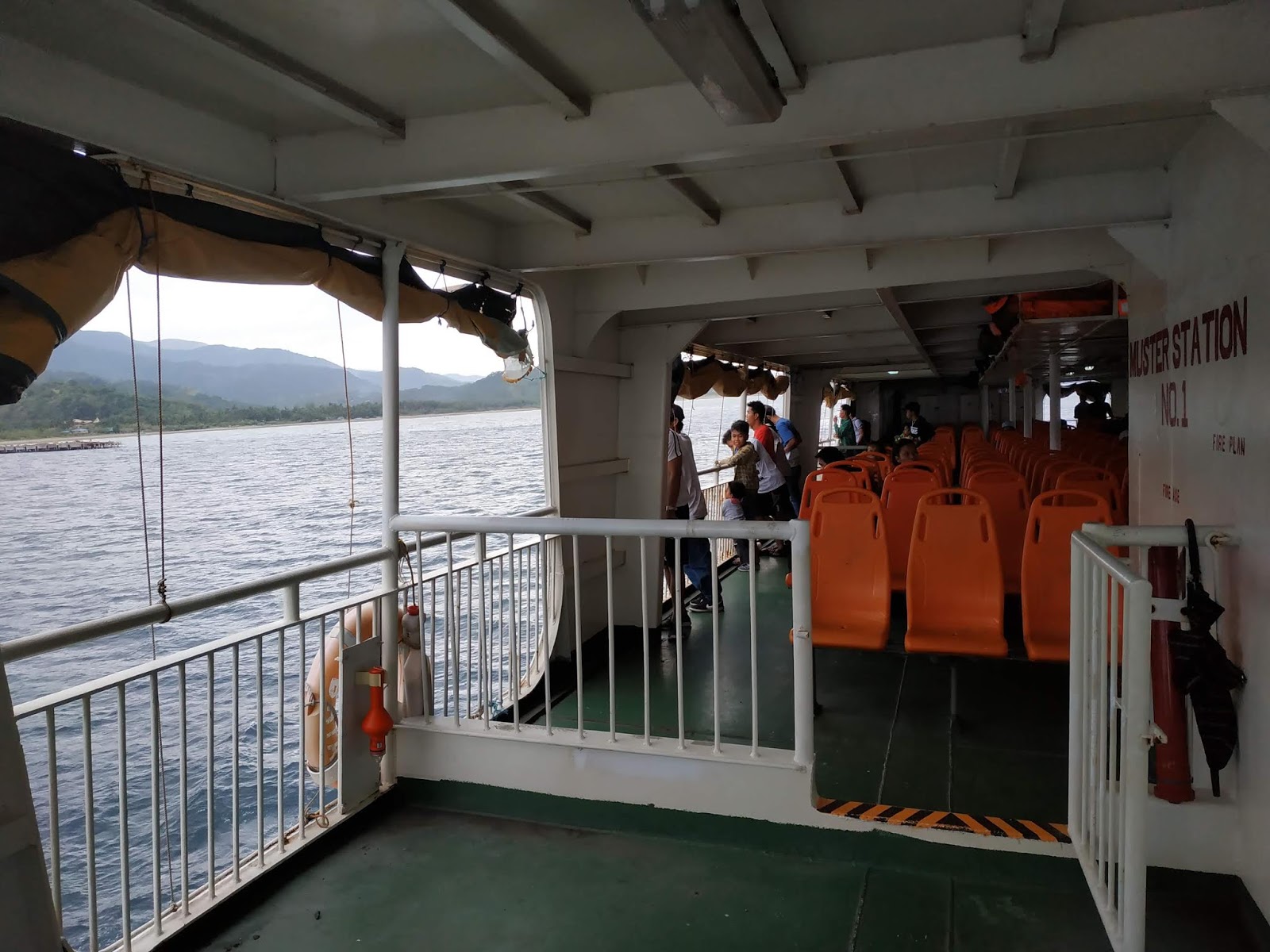
Ship, ferry, fast craft, oversized banca cross passengers, cargoes, freight trucks, private vehicles to the other side. Batangas pier serves as the gateway to the island not only to Luzon but to the Visayas and Mindanao.

Once on shore at the island, San Jose can be reached in 4.5 hours from either entry point slightly faster via Abra de Ilog. From Abra de Ilog, kilometer distance is 189 while from Calapan, 239 kms with winding road towards the last hours. Both routes show scenic views of farmlands mostly rice and on the inner side, mountains and rivers. At the center are two nationally known mountains, the high and mighty Mt. Halcon with an altitude of 2,583 MASL and the Mount Iglit-Baco National Park, a ASEAN heritage park.

Compared to travelling on a landlocked area, mobility in island hopping is extremely unique. Trips are not marked only by landmarks but by the changing transport. From a public bus, one takes a RORO to cross the island. At the island, one can choose a utility van or continue with the bus ride. At the town proper like any other town, there are tricycles and private vehicles.

An inter-island trip provides a diversity in experience. For someone who travels not only to move from point A to B but in deepening appreciation for a place and the self, Mindoro has more than enough stimulus.

The 12-hour travel to San Jose the 18 hour stay and another 11-hour return trip is simply scratching the surface. What is beneath the Mindoro and the Tablas strait? What is at the peak of Mt. Halcon? What made Mt. Iglit a candidate as a UNESCO Heritage site? ? More importantly, how does a resident whether an aborigine, original settlers, migrants, and overstaying transients think and feel?

Initial trips to the island answer logistical interests. The succeeding visits satisfy the deeper understanding of the spirit of the place.


-Written on X270 using Microsoft Office 365 ProPlus

Tuesday, December 18, 2018

Public Transpo to the Airport. New Features of Local Air Travel


Public Transpo to the Airport

Options travelling to the Pasay airports have been added other than using a private car, taking a taxi, riding the bus and the MRT.

Taking the taxi, you need to negotiate with the driver 1st for his willingness to go South from North and secondly on the rate.

Using the car, you contend with the heavy traffic, the law enforces and parking.

Riding the bus combined with MRT is tedious. With your luggage, it is an effort moving from pick up point to the next and from entrance to the rear of the coach.

The P2P addresses the difficulties one faces in these different modes of transportation. The Point 2 Point coach is spacious, air-conditioned with enough safe space for luggage. Rates are fixed at P100, almost a third of the non-peak taxi fare, if you can spot one.

You must contend with fixed schedules (about an hour gap in between rides which at times though is not followed to the minute), multiple rides as the stations in the North are in Araneta Center, Ortigas. Given this, one must give enough lead time to meet your check in deadline.

What is convenient about the new mode of transportation is, it covers the fur airport terminals, NAIA 1 (original international airport beside the Nayong Pilipino NAIA 2 (formerly Centennial of PAL), NAIA 3 (fronting Resorts World) and NAIA 4 (small airport). You can take the P2P at the designated terminals at the airports back to the city terminals.

-Written on Thinkpad X270 using Microsoft Office 365 ProPlus

New Features of Local Air Travel

Those who have not traveled via commercial air for the past decades maybe disoriented to new ways of booking and flying.

Before, one needed to physically go to an airline ticketing office to see flight schedules, seat availability and to book a seat. Now one just does it online. But one must have a credit or debit card with a security code and an active email address. Booking is done real time with the current rate on a first come first served. There are still a few ticketing offices spread over the country but mostly only in the airports.

Rates fluctuate depending on the traffic, date and season. The closer to the flight date, the higher the rate.

Passenger patronage has increased so did new air travel destinations. Checks in lines at the airport are longer but operating hours are longer. There too are added ways to check in: using the internet or mobile phone for web check in or the check in kiosk at the airport. All check in processes are secured by a code where physically printed ticket is no longer necessary.

Boarding passes are bar coded and quickly scanned prior to boarding the plane. One has yet to present an ID for security reasons. Terminal fee is now incorporated in the cost reducing check in steps.

Security is more stringent. Scanners are installed to speed up the screening. At time sniffing dogs sniff at the luggage for contraband detection. Shoes, wallets, metallic objects, phones and belts are still to be separated from the body.

Flight changes are accommodated at a cost subject to seat availability and should be done hours before the booked schedule. Cost is adjusted based on the prevailing flight rate of the new schedule which is usually at a premium.

Flying distances are earned by the passenger to earn points for premium redemption. This is made possible through a unique identification enrollment. Services are likewise compartmentalized which can be customized at an added cost. One can opt not to check in a luggage, not have an in flight meal nor a premium seating.

Lastly, because service is done following a routine, do not expect for a personalized service treatment. This is trade off to a more efficient and safer air travel.

Happy and safe travel


Monday, December 10, 2018

Film The Bachelors. Struggling with Grief and Overcoming Getting Stuck

Caught on SkyCable HBO Hits HD  2017 Channel 169 this December a film The Bachelors about a father and son, a university professor and a conscientious student and an aspiring marathon athlete who lost the woman (wife and mother) of their life who was endearing to them.

Movie is fueled with sensitive and engaging characterization of realized real persons with relatable emotions on their grieving, coping, adjusting and transitioning.

Environment (the university and friendships), situations (pair ups) and evolved positive values of the father and son help them cope with their roller coaster condition.


There are Wes, Bill, Carine, Lacy and Wes' friends (characters) in Philippine setting I'ld like to interact with.

Father and son struggled and eventually overcoming the "got stuck" condition through the son Wes. They stimulate what a full and happy living is.

https://youtu.be/4-mznKj3lHc

https://deadline.com/2017/06/the-bachelors-jk-simmons-movie-josh-wiggins-odeya-rush-julie-delpy-1202115737/?fbclid=IwAR2xOwDE3GyuQ7-gGjIwzN9deTgE8U92sUmMxOJ7R9BcXDxNCPOVIwwRDcg  
https://youtu.be/TMJqsiYZ2Rk

Friday, November 30, 2018

Turn me loose

What could be more engaging musically than a videoke bar at the roof deck of a 2Go ship. Down to earth folks like you and me drowned in cans of Red Horse beer would belt out familiar songs like Green Green House of Home by Engelbert Humberdick, Skyline Pigeon by Elton John, My Way by Frank, King and Queen of Hearts among others to the crowd's wild appreciation.


There is something about music that is attached to us. This attachment is perhaps that makes us cope with the adversities in our lives.

As music soothes, gives comfort, heals and even equalizes.


Offshore Gig

What is it like watching a gig in a grand arena? You are drawn to known singers along with hundreds. It takes an effort to commute and to park. The queue is long. During the show, you most likely end up watching the live concert on screen. But what energy you generate with the huge crowd.

At the Harbour Cafe on the shoreline of Odiongan Romblon, my attention was caught by the lead singers of an acoustic band Fool Page performing RNB Top 40 songs to a crowd of less than 20. Their musicality, voice quality and interpretation of cover songs make you look at the stage while dining to satisfy the curiosity poked in a remote island in Luzon. Who are the gifted performers with these wide range? A tenor pop singer in an island?

I was awed with the main leads' voice and the choice of songs. I liked best Zhelmark Maaba Gajisan's opening songs for the sets followed up by songs interpreted by an equally talented lady singer with a powerful voice Ilene Gajisan. Completing the trio is a versatile singer and guitarist Ian who swings from pop to reggae although their forte is RNB and pop like Attention by Charlie Puth, Rockabye by Clean Bandit, So Sick by Ne-Yo.

Truly a delight to hear. Their music is supported by a lean band and a well-balanced sound system. For the price of the drinks at P45.0 and the performance level in the semi-outdoors along the beach, it was a wow! It was penetrating music within intimate arms' reach. Short distance between them and us.

Thanks for the music Fool Page. When I come back to Romblon, you will be one of the attractions not to be missed. Hopefully not yet in a grand arena.

Z. Gajisan-Vice Choirmaster. Counter Tenor Yagting Kanugkog RSU Chorale. Lead Vocalist FoolPage

-Posted on board 2Go completed on a Ceres bus

Thursday, November 22, 2018

Ilocos Norte, Amianan (North) to Abagatan (South) in 10 hours 16 destinations covering 196 km

What can one do in 10 hours?
Starts at the Laoag Wednesday open market along downtown JP Rizal st. at 9:00 AM and ends at the Laoag International Airport at 7:00 PM

1. Go up Amianan (N) up to 77km to Pagudpud. Enter Hannah Resort. Stroll. Resist the gusty wind
2. Walk down the Bantay Abot Cave. Pass through the hole. Retreat

3. Pass by Patapat viaduct. Marvel at the engineering design. Look up to see the abandoned national road
4. Climb to the Grotto at the Paraiso ni Anton end of Pagudpud. Make a wish. Wash up


5. Eat lunch at the carinderia along the national highway. Refuel for the balance of day activity
6. Be on the lookout for imposing rotating blades gradually moving closer. Stroll along the shoreline to view the Danish funded and designed Bangui windmills. Count 102 (Pagudpud-32, Burgos-50 and Bangui-20 quoted by OJTs). Each windmill can generate about 1.6MW of power running at 24 hours
7. Move to the next town Burgos. Walk for a closer look at the Kapurpurawan limestone formation. Be guided by the OJT volunteers for technical info on the formation. Take a peek at the solar farm and the windmill central station on your way out
8. Climb up the Cape Bojeador lighthouse. Take a panoramic shot of the 360-degree view. Inspect the museum and the architecture


9. Travel down Abagatan (S). Assess the concrete modern mansions built by the balikbayan immigrants from Hawaii in Bacarra 
10. Spot the rock salt in clear plastic bags and the Ilocos black vinegar in PET bottles displayed in a string of market stalls along the road
11. Return back to Laoag to cross for Paoay's Malacañang of the North. Simulate residing in the palace sleeping in the 1st Family's bedrooms
12. Say a prayer, light a candle at the Paoay Church. Go back in time when the Spaniards ruled over the natives

13. See the Marcos' mausoleum in Batac. Remember Apo Lakay

14. Join the crowd for an empanada feast in Batac
15. Capture the night lights in San Nicolas. Count the car dealer showrooms along the road
16. Check in at the Laoag international airport for the next destination or plan for your return trip


Journeying as a day tourist without an immersion provides a sampler. Living, breathing shared space and air with the residents deepens the experience imbibing the spirit of the place.

From Wilkipedia-spirit (or soul) of place as “the unique, distinctive and cherished aspects of place.”

(Approximate cost-Php7K+. Transpo-P6.5K. Entrance Fees-P150.0 average P30.0. Food and others-P500.0)


Rediscovering Laoag

Images of a place where residents speak their own distinct language and live and act influenced by traditions passed on through generations.


Where the folks are known to be industrious, simple and frugal, gifted with long lives proud of their roots.

Generally, though highly politicized they recognize no other leader other than their own.


Like other urban cities, the wooden houses are gradually being demolished replaced with concrete structures and agricultural lots converted to commercial zone.


A place where migrants from Hawaii keep returning back driving the economy robust.


While Ilocos is in a landlocked area, it stands alone separate from others due to its cultural uniqueness.

Sunday, November 04, 2018

Images of Coffee Table Books


In between chores in a commercial center, I dropped by a Booksale outlet to check what’s new in travel.

Two coffee books caught my interest: National Geographic Coffee Table book on National Parks of North America and a book of images on Work and The World in Photographs and Faces of Africa.

Introduction of the Faces of Africa Thirty Years of Photography authored by Carol Beckwith writes about a global portrait and glorifying individual appeals. “Each image unfolds new and revealing perspectives; taken together, they create nothing less than the group portrait of a world that draws strength from shared values and common experiences even as it glorifies in the unique appeal of every individual.”

National Parks of North America by Annelise Hobbs in its foreword quotes Marion Walcott on capturing images, “Speak with your images from your heart and soul. Give of yourselves. Trust your gut reactions. Suck out the juices-the essence of your life experiences. Get on with it; it may not be too late.”

Subjects on man, nature are everywhere. It takes a critical eye to identify worthy of documentation. When beautifully captured in images, they impact on the human experience. Sharing the work heightens the emotional affinity.

-Chito

Freedom of Mobility and Choice

Freedom that I relish the most are the freedom of mobility and choice (of food).

Mobility is the ability to move around without any constraint tapping available resources. In the city there are several: the most common and often untapped is walking, the most efficient is the MRT Blue line that traverses from North EDSA to EDSA Taft, the LRT1 Yellow Line from Monumento to Baclaran and the LRT2 Purple line from Santolan in Pasig to Recto in Manila.

Other popular modes of transport are jeepneys, tricycles, taxicabs and a creation of the decade, the FX and a creation out of need, habal-habal, Point to Point, Grab and Angkas.

Islands are crossed by air, land and sea.

Freedom to move around allows a wider freedom of choice of food. Choosing is the prerogative to point, in the local language, point-point or “turo-turo.” 

Proof of the moving is in the eating.

-Chito


Friday, November 02, 2018

Lost Grounds


The loss is more than a loss of destination for adventure lovers. It is a take on centuries of time, resources and worst of all lives. It is a deprivation not only of the affected communities but also of the whole nation.

Polilio, Infanta, Real in Quezon and Dingalan, Gabaldon, Baler in Aurora by land seem worlds’ apart. To go to Polilio, you take the Rizal, Laguna route entering Siniloan. Gateway to Gabaldon and Baler is via Bulacan and Nueva Ecija before Cabanatuan. Looking at the Luzon map, both places are at the east coast of the Philippines connected by the Sierra Madre range and the Pacific Ocean. Linked to Infanta and Baler at the extreme North is Palanan Isabela but little is known about the place as it is not accessible by land.

Once upon a time, both places are alternative destinations to the highly commercialized and populated beaches of Batangas, Cavite and Zambales. In the 90’s Quezon and Aurora fit the Lonely Planet’s character of a travel adventure: remote, exotic, natural and still accessible.

Then, only trucks, 4X4s can bring you to the east coast. Reaching the ocean takes hours of bumpy ride if not days. With the road infrastructure initiated by the government in the mid 90’s, these places have become accessible via almost any type of vehicle. Real has become the favorite of cyclists and motored bikers and trike riders. Baler became popular as the surfing capital made popular by Action Asia and Apocalypse Now. Initially I thought these roads were meant to bring the produce of the remote dwellers closer to the center with these eco tourism benefits just trimmings. Only after Yoyong and Waling did I realize that these roads were meant to speed up the denudation of the forests. Cut trees can easily be transported to the mainstream and out of the country.

Like most outdoor lovers, we received this tragedy with sadness, despair and even helplessness. Once our pristine playgrounds that give us natural high have now become danger grounds. One is no longer safe. Even a drizzle can now kill. Little did we know that the flash floods that claimed the lives of 6 “excursionists/campers” in Siniloan in November 2000 was just a foreboding of the damage that has been done to our forests; denudation beyond the threshold which will no longer hold the soils and the water.

Seeing the aerial coverage of the news stations and hearing the personal accounts of friends who attempted to trek through broken roads and ridges in mud and water, the message is clear. There are no more resources for us to relish in our time.  All have been lost.

We lost our playground. We have fewer destinations to go to. A small price compared to the livelihood and lives loss. And nothing compared to the loss of time and natural resources. Has our crusading been totally useless?  I hope not.

Chito.Razon 8 Dec 04

Tribute to the Hosts


"Times have indeed changed," recounts Mr. John Fortes in a social gathering at the Laiya Beach last 11 May put together by the club in his honor.

We climb to seek solitude and idyllic state offered by nature. Now we climb to find that we bring the noise and the clutter we are escaping from to the mountains.

That's the startling perspective John shared 23 years after he founded the PAL MC in 1979.

While 23 years seemed just like yesterday, the state of degradation on the environment made that yesterday looked like a century away.

Banny Hermanos on seeing a flock of crowd and the increasing number of nipa huts in Barangay Hugom said, "This place is now a place for all. That's the price we paid for accessibility."

He recalled way back in 1987, while looking for an alternative initiation climb for Famy and Maculot, he and Timmy Toledo stumbled into Laiya as an isolated lost paradise with pristine beauty.  There were no resorts-only a handful of bancas. With just a map and the drive for something new as an operations manager for the club, they discovered Mt. Catmon after traveling for two hours in a Toyota 4X4 land cruiser from San Juan Batangas. Today Laiya is a mere two and a half hour drive away from EDSA via Lipa.

"See that island?" I asked Dom Goduco incumbent Treasurer and major influencer of the club, while pointing South West from the beach. "I finally landed in Marinduque last week."  We go as far as Batanes, Polilio, Camiguin to get disconnected from it all. Yes within our midst, are still islands we have not explored.

Marinduque I promoted is one theme park that brings you back in time. It takes you just half a day to circle the 959 square kilometer island visiting all its 6 municipalities. The capital Boac is a livable Nayong Pilipino. To move from one end to the next, you skirt around the coastline in an hour from west side. Aside from snorkeling, you can climb Mt. Malindig with an altitude of 1,147 M ASL in 4-5 hours and cap your weekend in a relaxing hot spring. Best of all, it is still not a destination. Where else can you budget a P 600.00 weekend in a 6-hour travel from Manila in such a setting?

John in the late 70's. Banny in the 80's. Us now in the 21st century. Three generations that span decades of climbing. They thread on new grounds searching. While the discovery in itself is satisfying, the fulfillment is letting others follow. We pay tribute to them as quoting the philosopher Homer, "a guest never forgets the host who had treated him kindly." Thank you for opening these places to us.

Chito Razon 15May2002

Thursday, November 01, 2018

Last Chance at the Last Frontier


26 participants had a taste of the last frontier of the Philippines through the Coron Waters Adventure organized and led by PALMC President Banny Hermanos this 13-16 May 2005. Ably assisted by PAL employees and affiliates, Dexter Macapagal and Bunsoi, this 2.8 day-revitalizing weekend (67 hours) was spent mostly on water; 52 hours on or above water, 15 hours on land.

What is Coron Palawan but islands, water, diving, snorkeling, swimming, shipwreck spotting, trekking and eating that logged in about 75 kilometers moving around the group of Calamian Island. Count the adventures in this action-packed weekend: trek to Mt. Tapyas elevation 210 M ASL, 718 steps for the initiates, lapping at the Kayangan Lake, the cleanest in the Philippines still, snorkeling at the Twin Lagoon and Barracuda Lake, lunch at CYC (Coron Youth Club) island, dock at Banana Island, walk around the Culion Leper Colony, search for pearls at the nearby Pearl Farm, look for shipwrecks at Lusong, dive for giant jellyfish at Skeleton Island, snorkel at corals at Siete Pecados Marine Sanctuary.

While at the Banana Island exclusively for us, a series of activities naturally happened aside from the usual tent pitching, seafood grilling, bonfire and socials. Would you believe, basketball, Frisbee throwing and competitive beach volleyball? To cool down the active bodies as we end the adventure Sunday afternoon, we were treated to a hot spring bath at the Makinit Hot Spring.

Refueling the energy of the participants for the two days at the island were seafood preparations by Chinese chef Stephen, Boholana Virgie and initiate May. Cooking was done mostly while the group was in transit. Consider yourself disabled without a boat. Moving us around hopping from one island to the next was St. Joseph the Worker Boat captained by Toti and his assistant Tony. Readings by Lito Nazereno showed cruising speed of about 24 km per hour (slower than Super Ferry's 30 km per hour).

Travel like a time warp has a way of transforming us to the past. Our visit at Culion brought us back to the Spanish era in 1740 where the church served at the sanctuary of the soul and a fortress defending the land against the invaders. Visiting the Culion Leper Colony and the Culion Museum set us back to 1906 when the colony was institutionalized and supported through intervention of the American Governor General Leonard Wood. While snorkeling peeping at the corals, we recall in the not distant past that the corals then were more abundant and alive. We hope that as the people of Calamian Island preserved their historical artifacts, they will do the same to their fast dwindling natural resources.

In 2000, travel writer Amadis Ma. Guerrero wrote about enchanting, craggy Coron Island enjoining readers to visit it before its turns commercial, expensive and spoilt. This year, through the selflessness of ace photographer and club president Banny, we were able to catch still the pristine and natural wonder of Palawan for a measly P 1,000 a day.

Do not tell that to the other excursionists we were with the WG&A. They spent a lot more and saw not as much. How else can we express our appreciation but say profusely our thanks. The next time we visit, we may not like what we will see. Timely, we were at the last chance at the last frontier of the Philippines.

-Chito 16 May 2005